Why Migratory Birds Return to Ukraine in Spring: Key Ecological Reasons
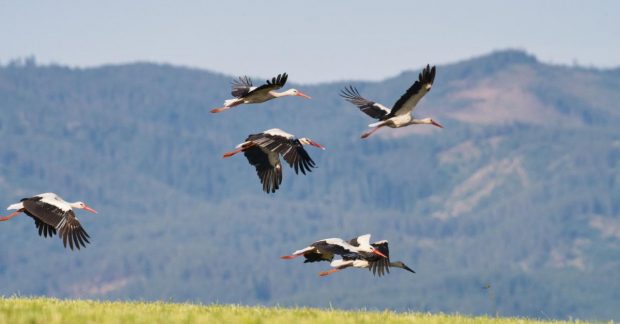
Every year, over 200 species of migratory birds travel thousands of kilometers from Africa and South Asia back to Ukraine. Scientists explain the biological drivers behind this mandatory seasonal migration.
 🏙️City
Photo: UNIAN
Key points
- High competition for food and nest space in tropical zones drives birds back north.
- A 16-hour summer daylight period in Ukraine gives parent birds more time to feed their young.
- Fewer winter-surviving predators in Ukraine increase chick survival rates.
With the arrival of spring, hundreds of migratory bird species, including storks, swallows, cranes, nightingales, and starlings, return to the natural habitats of the Pereyaslav region and Ukraine. Although spending the entire year in the warm climates of Africa or South Asia might seem easier, these birds undertake hazardous journeys back north to nest.
Resource Competition and Nest Safety
The main factor driving their return is intense competition for resources in tropical wintering grounds. Tropical ecosystems host numerous resident species, leaving migratory birds with limited suitable nesting sites and food for their chicks. Furthermore, tropical regions have a higher density of predators, such as snakes, that destroy nests.
In Ukraine's temperate climate, many natural predators fail to survive the harsh winter. This environment offers a significantly safer setting for hatching and raising offspring, outweighing the exhaustion of long-distance flights.
Extended Daylight Hours and Summer Biomass Surge
Daylight duration and seasonal food availability also play a crucial role. Near the equator, day and night remain equal at around 12 hours year-round. In contrast, Ukrainian summer days can last up to 16 hours, providing parent birds with extra hours between sunrise and sunset to forage for their young.
Additionally, the Ukrainian summer triggers a massive surge in biomass, producing an abundance of insects and lush vegetation. This seasonal peak provides growing chicks with high-protein food when they need it most. Notably, some weaker or elderly birds remain in their wintering grounds if they do not need to reproduce.
Source UNIAN — unian.ua/curiosities/pochemu-pticy-ne-ostayutsya-v-teplyh-krayah-na… ↗
Read next
 💼Economy
ISW analyzes humanitarian corridor prospects: why Kremlin's proposals for Donetsk region are questionable
Analysts at the Institute for the Study of War explain why Russia's proposal to evacuate from Kostiantynivka is unfeasible, unlike Ukraine's initiatives in the Kherson an…
 🛡️Security
Oil refinery attacked again in Novoshakhtinsk, Russia
An oil refinery in Novoshakhtinsk, Rostov region, was hit by an attack on the night of November 23.
 🚨Events
Man shot dead in Kharkiv: police launch special operation
On the evening of November 22, a man was found dead in Kharkiv following a shooting incident. Law enforcement agencies have initiated a special police operation to locate…
 🛡️Security
Fragments of newest Russian X-101 missiles found in Poland
Wreckage of Russian cruise missiles manufactured in late 2026 has been discovered in eastern Poland, prompting a response from NATO.
 🛡️Security
Charity auction in Lviv region raises UAH 60 million for Ukrainian defenders
A major charity auction in the Lviv region has raised funds to purchase drones and support the rehabilitation of a wounded soldier.
 🏛️Politics
Russian missiles and drones violate Polish airspace: government reaction
Polish officials have accused Russia of a deliberate provocation after missiles and a drone fell in the southeast of the country.